Energy Resources for GCSE Physics
Every day, we use energy.
We use it to heat our homes, cook food, charge phones, power lights, run schools and hospitals, move cars and buses, and generate electricity. Without energy resources, modern life would be very different.
In GCSE Physics, an energy resource means something that can be used to provide energy.
Some energy resources are used mainly for transport. Some are used for heating. Some are used to generate electricity. Many can be used for more than one purpose.
The main energy resources available on Earth are:
coal
oil
gas
nuclear fuel
bio-fuel
wind
hydroelectricity
geothermal energy
tides
the Sun
water waves
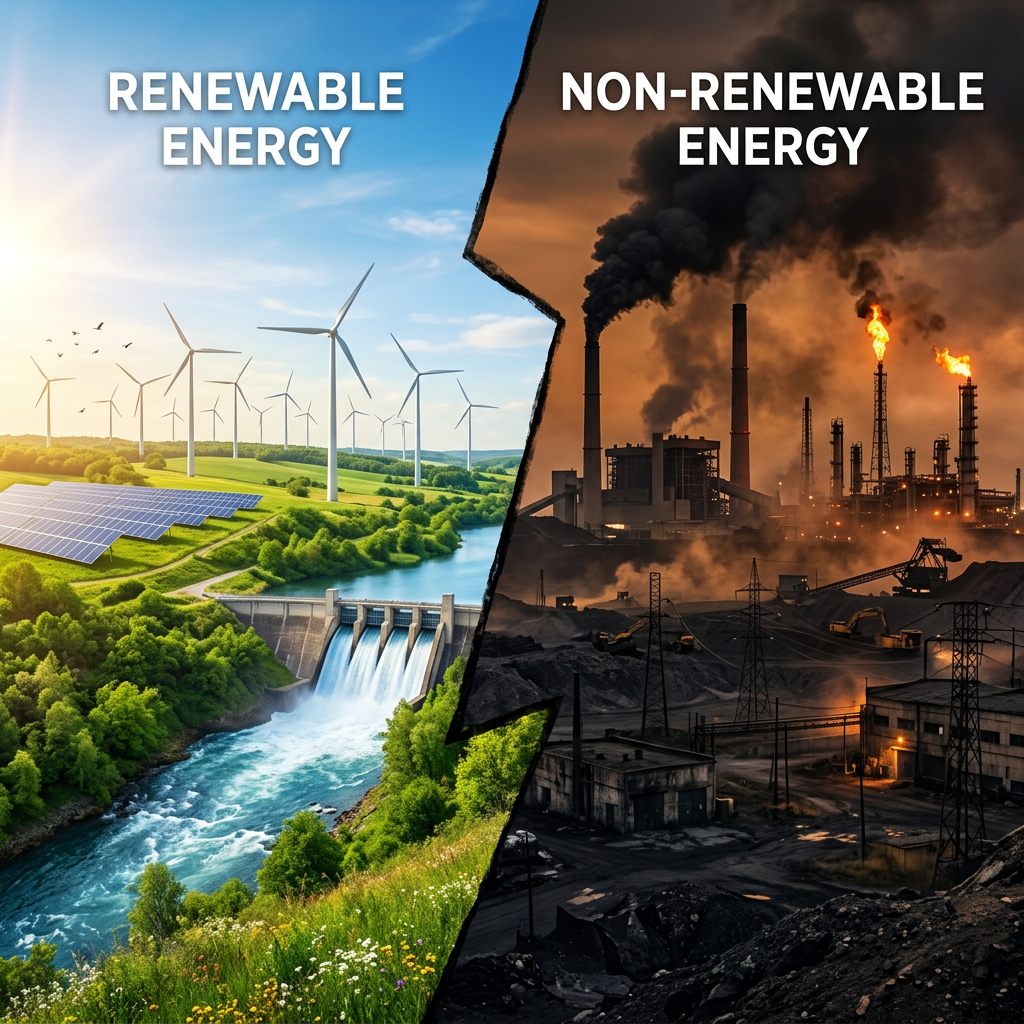
These resources can be split into two main groups: renewable and non-renewable.
What Is a Renewable Energy Resource?
A renewable energy resource is one that is replaced as it is used, or can be replaced in a short time.
This means it is not likely to run out in the same way as fossil fuels.
Wind is renewable because winds keep being produced by natural processes. Solar energy is renewable because the Sun keeps giving out energy. Tidal energy is renewable because tides keep rising and falling. Bio-fuels are renewable because crops and plants can be grown again.
Renewable does not mean perfect. A renewable energy resource can still cause problems. For example, wind turbines can affect landscapes and wildlife. Hydroelectric dams can flood land. Bio-fuels can take up farmland that could be used to grow food.
However, renewable resources usually produce far less carbon dioxide than fossil fuels when they are being used.
What Is a Non-Renewable Energy Resource?
A non-renewable energy resource is one that is being used up faster than it is being replaced.
Coal, oil and gas are non-renewable. They are fossil fuels, formed over millions of years from the remains of ancient plants and animals. We are using them far more quickly than they can form again.
Nuclear fuel is also non-renewable. Nuclear power stations often use uranium, which is mined from the Earth. There is only a limited supply.
Non-renewable resources are useful because they can provide large amounts of energy and are often very reliable. The problem is that they will eventually run out, and some cause serious environmental problems.
Fossil Fuels: Coal, Oil and Gas
Fossil fuels are coal, oil and gas.
They have been very important energy resources for many years because they are easy to use, release a lot of energy, and can be used when needed.
Coal has often been used to generate electricity and power industry.
Oil is very important for transport. Petrol, diesel and aviation fuel are made from oil, so it is used in cars, lorries, buses, ships and planes.
Gas is commonly used for heating homes, cooking and generating electricity.
The big advantage of fossil fuels is reliability. They do not depend on the weather. A gas power station can generate electricity whether it is sunny, cloudy, windy or calm.
The big disadvantage is pollution. When fossil fuels are burned, carbon dioxide is released. Carbon dioxide is a greenhouse gas, so it contributes to climate change. Burning fossil fuels can also release other pollutants that damage health and the environment.
Fossil fuels are also non-renewable, so they cannot be used forever.
Nuclear Fuel
Nuclear fuel is used in nuclear power stations to generate electricity.
Nuclear power stations do not burn fuel like coal or gas power stations. This means they do not release carbon dioxide while generating electricity.
This makes nuclear power useful for producing large amounts of low-carbon electricity.
Nuclear power is also reliable. It can generate electricity day and night and does not depend on the weather.
However, nuclear power has problems. Nuclear fuel is non-renewable. Nuclear power stations are very expensive to build and take a long time to plan. They also produce radioactive waste, which must be stored safely for a very long time.
Some people also worry about nuclear accidents, even though serious accidents are rare.
Bio-fuel
Bio-fuel is fuel made from living or recently living material.
This could include wood, crops, plant oils, or waste from living things.
Bio-fuels can be used for heating, transport and electricity generation.
Bio-fuel is usually classed as renewable because plants can be grown again. However, it is not completely problem-free.
When bio-fuels are burned, carbon dioxide is released. The plants used to make the fuel absorbed carbon dioxide while they were growing, so bio-fuels may have a lower overall impact than fossil fuels.
The problem is that growing crops for bio-fuels needs land. This land could be used to grow food. In some places, forests may be cleared to grow bio-fuel crops, which can destroy habitats and reduce biodiversity.
Wind Energy
Wind energy uses moving air.
Wind turbines are used to generate electricity. When the wind blows, the blades turn.
Wind is renewable because it will continue to be produced naturally.
Wind energy is also low-carbon because it does not release carbon dioxide while generating electricity.
However, wind energy is not always reliable. If there is no wind, turbines cannot generate much electricity. If the wind is too strong, turbines may have to be stopped for safety.
Some people also dislike the appearance of wind farms. Wind turbines can be noisy and may affect birds or local habitats.
Wind power is useful, but it normally needs to be part of a wider energy mix.
Hydroelectricity
Hydroelectricity uses moving water.
Water is often stored behind a dam. When the water is released, it flows downhill and can be used to generate electricity.
Hydroelectricity is renewable because the water cycle keeps replacing the water.
It can also be reliable if there is enough water stored. Hydroelectric power stations can respond quickly when electricity demand increases.
Hydroelectricity does not release carbon dioxide while generating electricity.
However, building dams can cause major environmental damage. Large areas of land may be flooded. Habitats can be destroyed. People may have to move from their homes. Rivers and fish populations can also be affected.
Hydroelectricity is useful, but only in suitable locations.
Geothermal Energy
Geothermal energy comes from thermal energy inside the Earth.
In some places, hot rocks underground can heat water. This hot water or steam can then be used for heating or electricity generation.
Geothermal energy is renewable and reliable. It does not depend on the weather or the time of day.
This makes it more dependable than wind or solar energy.
The disadvantage is that geothermal energy is only useful in certain places. Some countries have hot rocks much closer to the surface than others. Drilling can also be expensive.
Geothermal energy usually has a low environmental impact, but it cannot be used everywhere.
Tidal Energy
Tidal energy comes from the rise and fall of sea levels.
Tides are caused mainly by the gravitational pull of the Moon.
Tidal energy is renewable because tides keep happening.
A big advantage of tidal energy is that it is predictable. We know when tides will come in and go out. This makes tidal power more reliable than wind or solar power.
However, tidal power can be expensive to build. It can also affect coastal habitats and wildlife. Tidal barrages may change water flow and affect fish, birds and mudflats.
Tidal energy is useful in some coastal areas, but it cannot be used everywhere.
Solar Energy
Solar energy comes from the Sun.
Solar panels can be used to generate electricity. Solar energy can also be used to heat water.
Solar energy is renewable because the Sun will continue to provide energy for a very long time.
Solar power does not release carbon dioxide while generating electricity. It can be used on homes, schools, businesses and even small devices.
The main problem is that solar energy depends on sunlight. Solar panels generate more electricity on bright sunny days. They generate less on cloudy days and none at night.
This means solar power is not completely reliable unless it is combined with batteries or other energy resources.
Water Waves
Wave energy comes from the movement of waves on the sea.
The movement of the waves can be used to generate electricity.
Wave energy is renewable because waves are produced naturally by wind blowing over the surface of the sea.
Wave power does not release carbon dioxide while generating electricity.
However, wave energy is difficult to use on a large scale. Equipment in the sea must survive storms, salt water and strong forces. This can make wave machines expensive to build and maintain.
Wave energy has potential, but it is not as widely used as wind or solar power.
What Are Energy Resources Used For?
Energy resources are mainly used for three things:
transport
electricity generation
heating
For transport, oil is still very important. Petrol, diesel and aviation fuel all come from oil. Bio-fuels can also be used in some vehicles. Electric vehicles are becoming more common, but the electricity still has to come from an energy resource.
For electricity generation, many different resources can be used. Fossil fuels, nuclear fuel, wind, hydroelectricity, geothermal energy, tides, solar energy and waves can all be used to generate electricity.
For heating, gas is commonly used in homes. Electricity can also be used for heating. Bio-fuels, geothermal energy and solar heating can also be used in some places.
Renewable and Non-Renewable Resources
A simple way to sort energy resources is to ask: will it run out?
Renewable resources are replaced as they are used.
Renewable resources include wind, solar, hydroelectricity, geothermal energy, tides, waves and bio-fuel.
Non-renewable resources are used faster than they are replaced.
Non-renewable resources include coal, oil, gas and nuclear fuel.
This is one of the most important differences to remember for GCSE Physics.
Why Are Some Energy Resources More Reliable Than Others?
Some energy resources are reliable because they can be used whenever they are needed.
Fossil fuels are reliable because they can be burned when energy is needed. Nuclear power is reliable because it can generate electricity continuously for long periods.
Geothermal energy can also be reliable because it does not depend on the weather.
Tidal energy is reliable in a different way. It is predictable. We know when the tides will rise and fall, even if tidal power is only available at certain times.
Wind and solar energy are less reliable because they depend on conditions. Wind turbines need suitable wind speeds. Solar panels need sunlight.
This is why countries usually use a mixture of energy resources. This mixture is called an energy mix.
An energy mix helps make sure electricity is available when people need it.
Environmental Problems
Every energy resource has some environmental impact.
Fossil fuels cause some of the biggest problems. Burning coal, oil and gas releases carbon dioxide, which contributes to climate change. It can also release pollutants that cause air pollution and damage people’s health.
Coal is especially polluting compared with many other energy resources.
Oil can cause pollution when it is burned. Oil spills can also damage oceans, beaches and wildlife.
Gas releases carbon dioxide when burned, but usually less than coal.
Nuclear power does not release carbon dioxide while generating electricity, but it produces radioactive waste. This waste must be stored safely for a very long time.
Wind power does not release carbon dioxide while generating electricity, but turbines can affect landscapes, make noise and affect wildlife.
Hydroelectric dams can flood land, destroy habitats and affect rivers.
Solar panels do not release carbon dioxide while generating electricity, but they need space and materials to manufacture.
Tidal power can affect coastal habitats.
Wave power can affect marine environments and is difficult to maintain.
Bio-fuels can reduce the use of fossil fuels, but growing crops for fuel can use land that might otherwise be used for food. It can also lead to habitat loss if land is cleared.
So, renewable resources are usually better for reducing carbon dioxide emissions, but they are not impact-free.
Science Can Find the Problems
Science helps us understand the environmental impact of energy resources.
Scientists can measure carbon dioxide levels. They can study climate change. They can monitor air pollution. They can compare how much energy different resources provide. They can also study the effects of dams, wind farms, solar farms and fuel use on habitats and wildlife.
This evidence is important because it helps people make better decisions.
However, science cannot always solve the problems by itself.
Energy decisions are also affected by politics, money, jobs, public opinion and ethics.
For example, science may show that burning coal increases carbon dioxide emissions. However, a country may still use coal because it is cheap, available, or supports jobs.
Science may show that wind power produces low-carbon electricity. However, local people may object to wind turbines being built near their homes.
Science may show that nuclear power produces low-carbon electricity. However, people may worry about radioactive waste or the cost of building nuclear power stations.
This is why energy choices are complicated.
Why Energy Use Changes Over Time
The way people use energy resources changes over time.
In the past, many countries used large amounts of coal. Coal was used in homes, factories and power stations.
Over time, coal use has fallen in some countries because it produces a lot of carbon dioxide and air pollution.
Oil became very important because it is useful for transport. Cars, lorries, ships and planes all need fuels that store a lot of energy.
Gas became popular for heating homes and generating electricity because it is convenient and usually produces less carbon dioxide than coal.
More recently, many countries have increased their use of renewable energy such as wind and solar power. This is because of concerns about climate change and improvements in technology.
Solar panels and wind turbines have become more common. Electric cars have also become more popular. This means transport may use less petrol and diesel in the future, but more electricity.
Energy trends change because of cost, technology, government decisions, public opinion and environmental concerns.
Comparing Energy Resources
There is no perfect energy resource.
Fossil fuels are reliable and useful, but they are non-renewable and release carbon dioxide.
Nuclear power is reliable and low-carbon during electricity generation, but it produces radioactive waste and is expensive.
Wind power is renewable and low-carbon, but it depends on the weather.
Solar power is renewable and low-carbon, but it depends on sunlight.
Hydroelectricity is renewable and can be reliable, but dams can damage habitats and flood land.
Geothermal energy is reliable and low-carbon, but only works well in certain places.
Tidal energy is renewable and predictable, but it can be expensive and affect coastal habitats.
Wave energy is renewable, but difficult to use on a large scale.
Bio-fuel is renewable, but it still releases carbon dioxide when burned and can compete with food production.
The best answer is often not one single resource. It is usually a mixture of resources.
The Big GCSE Idea
Energy resources are used for transport, heating and electricity generation.
Some resources are renewable. This means they are replaced as they are used.
Some resources are non-renewable. This means they are being used faster than they are replaced and will eventually run out.
Renewable resources include wind, solar, hydroelectricity, geothermal energy, tides, waves and bio-fuel.
Non-renewable resources include coal, oil, gas and nuclear fuel.
Some resources are more reliable than others. Fossil fuels and nuclear power are reliable because they can provide energy when needed. Wind and solar power are less reliable because they depend on the weather and time of day.
Different energy resources have different environmental impacts. Fossil fuels release carbon dioxide and contribute to climate change. Nuclear power produces radioactive waste. Renewable resources usually produce less carbon dioxide but can still affect habitats, wildlife and landscapes.
Science can identify environmental problems, but solving them is not always simple. Decisions about energy also depend on cost, politics, jobs, public opinion and what people think is fair.
That is why energy resources are such an important topic in GCSE Physics. They are not just about physics. They are about how we power our lives, protect the environment and make decisions for the future.
 The Physics Question Bank
Leave a comment