-
10 Careers That Use Physics
Physics is not just something you learn in a classroom. It is used in hospitals, airports, recording studios, power stations, space research, engineering companies and even in the design of buildings. If you enjoy understanding how things work, physics can lead to a huge range of interesting careers. Aerospace engineers design aircraft, rockets, satellites and…
-
Why Is GCSE Physics Seen as Difficult?

GCSE Physics has a reputation for being one of the most difficult GCSE subjects. Pupils often say it feels harder than biology or chemistry, not always because the ideas are impossible, but because physics asks them to think in several different ways at once. Physics is not just a memory subject. Pupils need to remember…
-
Dash’s 100 m Super Sprint: GCSE Physics Questions

Film clips are a brilliant way to make GCSE physics feel less abstract. One great example is Dash from The Incredibles running at superhuman speed. A simple 100 m sprint can bring in speed, acceleration, kinetic energy, forces, Newton’s laws, air resistance and energy transfers. The idea is simple: imagine Dash is running a 100…
-
What Does Each Wire in a Plug Do? GCSE Physics Explained Clearly
A plug connects an electrical appliance to the mains electricity supply. In the UK, mains electricity is about 230 V and uses alternating current, or AC. A three-pin plug contains three wires: live wireneutral wireearth wire Each wire has a different job. The colours help people connect them correctly and safely. The live wire is…
-
How Does a Radio Work? The GCSE Physics Explained Clearly

A radio works by sending information using radio waves. Radio waves are part of the electromagnetic spectrum. This means they are the same type of wave as microwaves, infrared, visible light, ultraviolet, X-rays and gamma rays. Radio waves are useful because they can travel very long distances. They do not need particles to travel through,…
-
How Is a Heat Wave Created?

A heat wave is a period of unusually hot weather that lasts for several days. It is not just “a hot day”. A heat wave happens when the atmosphere allows heat to build up over time. The main source of the energy is the Sun. The Sun transfers energy to the Earth by radiation. This…
-
How Do Air Conditioners Cool Rooms?
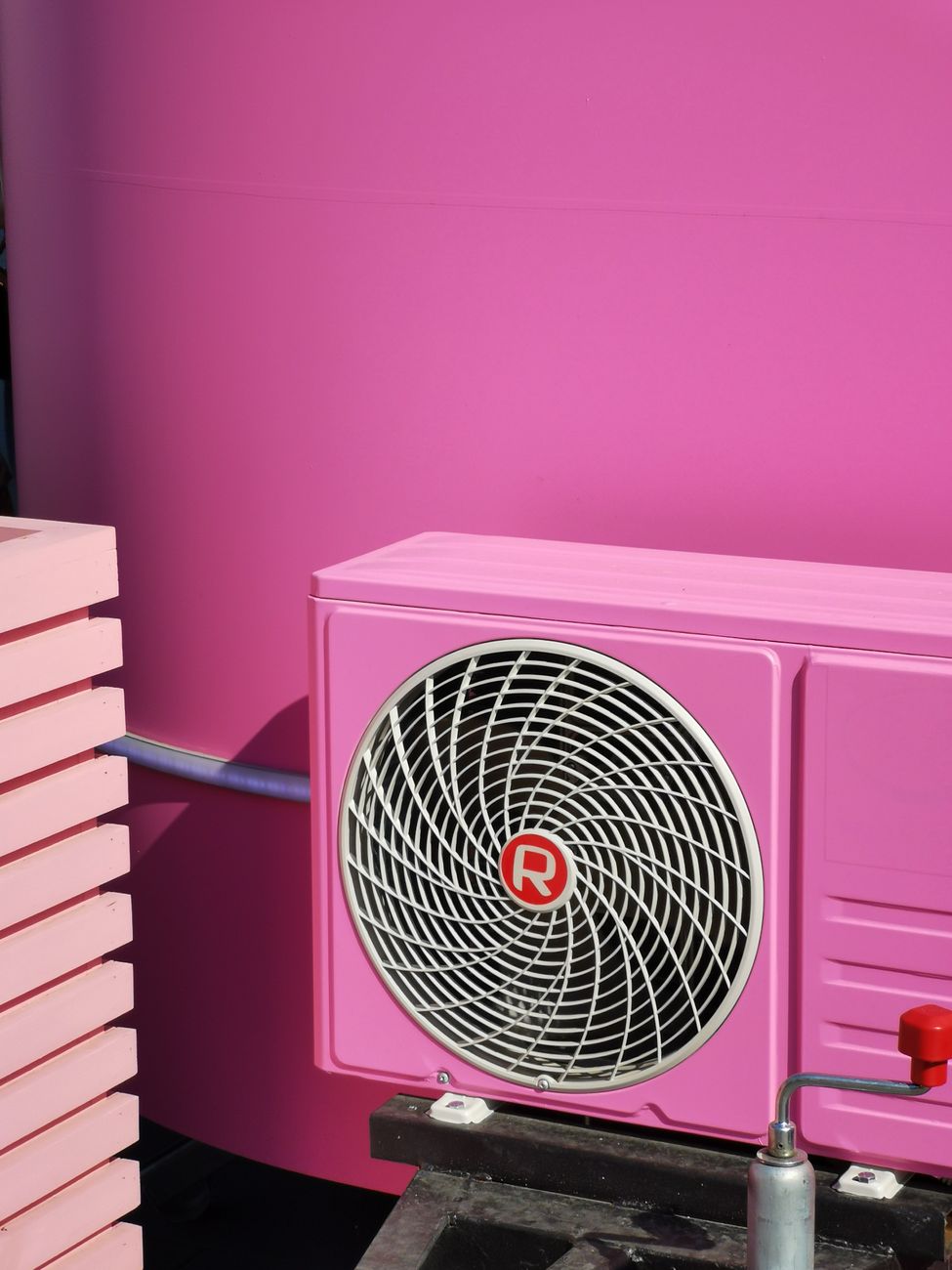
An air conditioner is a good everyday example of GCSE Physics. It links energy transfer, heating, cooling, particles, evaporation and condensation. A common mistake is to think that an air conditioner simply “makes cold air”. It is better to think of it as a machine that removes thermal energy from the room and transfers it…
-
Why Does the End of a Bicycle Pump Get Hot?

A bicycle pump is a simple object, but it shows some important GCSE Physics. It is a good example of energy transfer, work done, pressure and the particle model. When you push down on a bicycle pump, you apply a force to the handle and move it through a distance. In physics, this means work…
-
Why Ramped Questions Work So Well in GCSE Physics

GCSE Physics can feel difficult because pupils are often asked to do several things at once. They may need to remember an equation, rearrange it, substitute numbers, use the correct units and then explain the answer in words. For many pupils, that is a lot to manage in one question. Ramped questions help because they…
-
What the 2023 AQA GCSE Physics Paper 1 Examiner Report Teaches Us Examiner reports are one of the most useful revision tools for GCSE Physics. They show what students actually got wrong, where marks were lost, and what examiners were looking for. The June 2023 AQA Physics Paper 1 Higher report is especially useful because…
-
Subscribe
Subscribed
Already have a WordPress.com account? Log in now.
 The Physics Question Bank