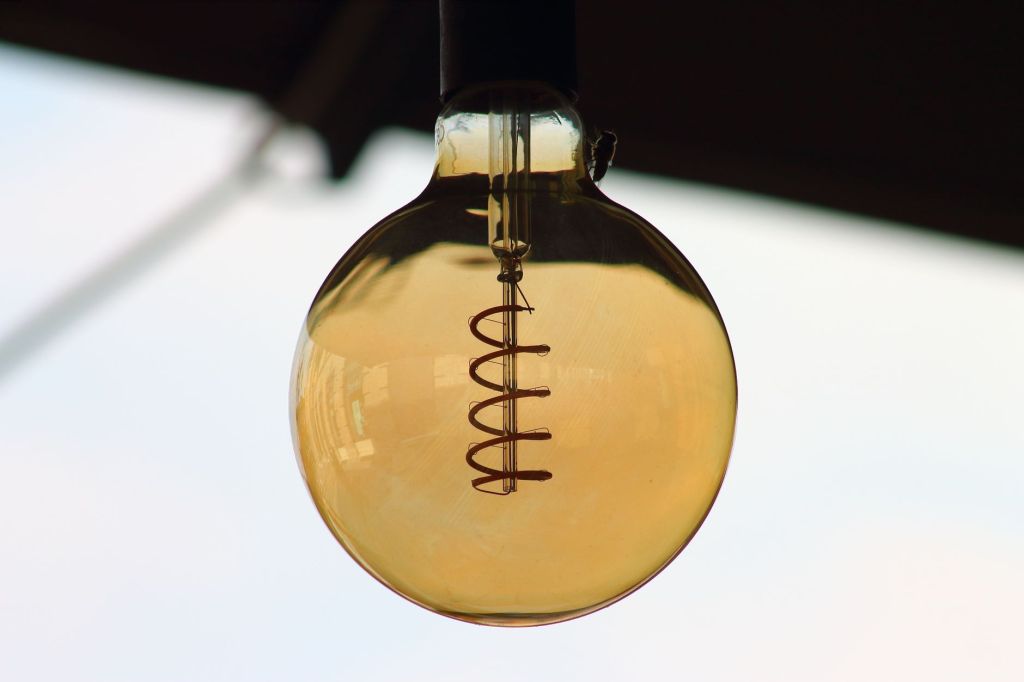
A filament light bulb contains a very thin metal wire called the filament.
When a current flows, the filament transfers electrical energy to its thermal energy store. This makes the filament heat up.
As the filament gets hotter, the metal ions in the filament gain energy and vibrate more vigorously.
The electrons moving through the filament then collide more often with these vibrating ions.
This makes it more difficult for charge to flow, so the resistance increases.
A stronger GCSE answer would be:
When current flows through the filament, the filament heats up. The metal ions vibrate more vigorously, so the electrons collide more often with the ions. These collisions make it harder for charge to flow through the filament, so the resistance increases.
In simple terms:
hotter filament → ions vibrate more → more electron collisions → harder for charge to flow → higher resistance
This is why a filament bulb does not have a straight-line current–potential difference graph. As the potential difference increases, the filament gets hotter, so its resistance increases.
 The Physics Question Bank
Leave a comment