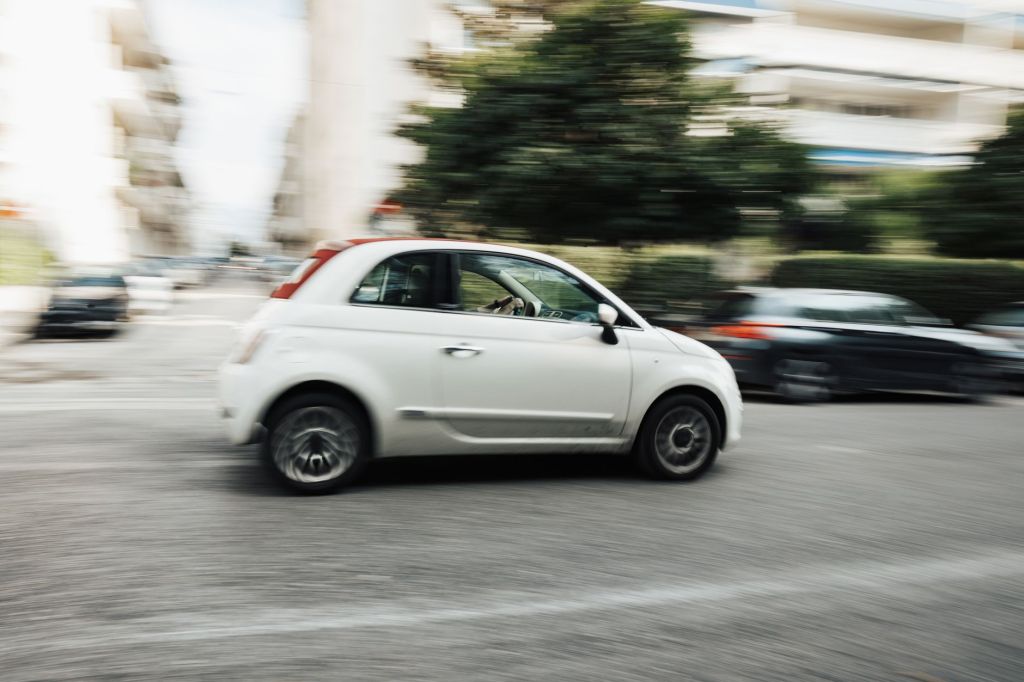
For AQA GCSE Physics, you need to be able to describe what happens to energy when a system changes.
A system could be one object, such as a car, or a group of objects, such as a kettle and the water inside it.
When something happens to a system, energy may be transferred from one energy store to another. Energy is not used up or destroyed. It is shifted between stores, or transferred to the surroundings.
A good way to answer these questions is:
Start with the energy store at the beginning.
Say what changes in the system.
Describe where the energy is transferred to.
Mention any energy transferred to the surroundings, usually by heating or sound.
Examples for AQA GCSE Physics
An object projected upwards
At the start, the object has energy in its kinetic energy store because it is moving. As it moves upwards, energy is transferred from the kinetic energy store to the gravitational potential energy store. The object slows down as its height increases. At the highest point, most of the energy is in the gravitational potential energy store.
A moving object hitting an obstacle
Before the collision, the moving object has energy in its kinetic energy store. When it hits the obstacle, energy is transferred to the thermal energy stores of the object and the obstacle. Energy may also be transferred by sound. If the object changes shape, some energy may be stored elastically.
An object accelerated by a constant force
When a constant force acts on an object, work is done on the object. Energy is transferred mechanically to the object’s kinetic energy store. The object speeds up because the energy in its kinetic energy store increases.
A vehicle slowing down
Before braking, the vehicle has energy in its kinetic energy store. When the brakes are applied, work is done by friction. Energy is transferred from the vehicle’s kinetic energy store to the thermal energy stores of the brakes, tyres and surroundings. Some energy may also be transferred by sound.
Bringing water to a boil in an electric kettle
Energy is transferred electrically from the mains to the kettle. Energy is then transferred by heating to the thermal energy store of the water. As the water heats up, the energy in its thermal energy store increases. When the water boils, energy continues to be transferred as the water changes state.
 The Physics Question Bank
Leave a comment